

Salam
The stance of Shah Waliullah on istighatha (seeking aid from the righteous) is frequently a point of confusion and contention. Anti-istighatha scholars often cite passages from his seminal work, Hujjatullah al-Baligha, or other disputed texts to support a strictly “reformist” view. However, a different picture emerges when reading his more intimate works like Anfas al-Arifin, which contains numerous pro-istighatha anecdotes and comments.
This raises the question: Which is the real Shah Waliullah?
Written words can easily be stripped of context or misrepresented by parties seeking to validate their own sectarian views. Often, the most reliable way to understand a scholar’s true position is to examine their personal practice and the instructions they gave to their closest students.
The Testimony of the Qawl al-Jalli
A decisive clarification on this issue can be found in the authorized biography of Shah Waliullah, Al-Qawl al-Jalli, penned by his close disciple, Shaykh Muhammad Ashiq Phulati. This work provides an intimate look at the Shah’s spiritual methodology, offering evidence so clear that it challenges the narratives of partisan interpreters.
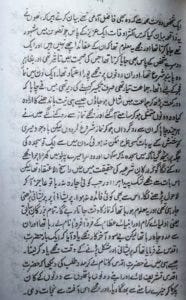
On pages 82–83, Shaykh Phulati records a specific instance of istighatha that Shah Waliullah taught his students—a practice cited approvingly by Phulati himself. According to the text:
“A person named Muhammad Yusuf, who was a learned and pious mystic (darwesh) person narrates from a person named Dost Muhammad who was also a pious learned (fadil) person who narrated the following incident:
I would usually go to a person who I was close to who was well known in tasawwuf but regarding whom I knew that his beliefs (aqaid) were not good. I would also go to another person whose company I found beneficial and outwardly he conformed to the sacred law (shariah), and I had full trust in both of them.
One day I got up for the Fajr prayer and the congregation was ready and about to begin, I wished to pray 2 units and then join the congregation, however just as I had formed my intention for this that both of these Shaykhs forms manifested in front of me and attempted to prevent me from praying. I wished to get rid of them and begin the prayer but despite my attempts I was unable to do so. One of the Shaykhs sat down at the place of prostration (sajda) in order to prevent me from prostrating. The other Shaykh stood next to me* and was preventing me…when I found I was unable to do anything I began to recite, ‘La Hawla…’ but I did not find this beneficial to my predicament. I was increasingly becoming more distressed and was aware that the time for the prayer was running out.
I then began to individually recite the names of the pious folk of the past, meaning the noble awliyah and great Prophets and seeking help from them. I then remembered that Hazrat-e-Aqdas (Shah Waliullah) had once said that at a time of distress or difficulty remember my name. As soon as I had called out/took the name of Hazrat-e-Aqdas and sought help from him that I saw that Hazrat-e-Aqdas appeared and with his two hands took both Shaykhs by the ear and banished them and saved me from this tribulation.
I thanked Allah for this and busied myself with the prayer, and this incident was a reason for my increased veneration of Hazrat-e-Aqdas.”